

You may have noticed Van Leeuwen Ice Cream on your local grocery store shelves. It’s packaged in pastel-colored cartons with “Van Leeuwen” written in black cursive. It’s easily identifiable and distinctive.

Rebel Creamery thought it was, too. So, it copied the colors and the cursive writing and then got sued by Van Leeuwen.
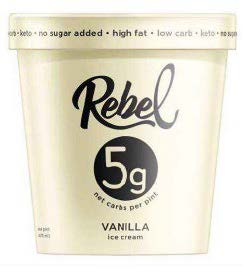
Rebel just didn’t lose its case; it lost BIG. In a very recent decision, the court awarded Van Leeuwen $23,785,000.00, representing Rebel’s profits from 2018 through 2024! That’s a huge amount, and whether it stays that high on appeal remains to be seen. Nevertheless, the gravity of the verdict certainly demonstrates the value of trade dress and the care businesses should take in developing their packaging.
This Trademark Circular describes what trade dress is, how you can maximize the protection it provides, and why businesses should think carefully about their packaging before going public with a brand.
Step 1 – Understand What Trade Dress Is
Trade dress is the overall commercial image projected by a product. It may consist of a product’s unique design, look, and feel, and may include traits such as shape, packaging, size, color, color combinations, texture, and graphics. In general, trade dress protects a product’s image and what makes it identifiable to consumers. It is not the same as a company’s logo or trademark, which is a word or discrete symbol, design, or stylization.
Trade dress can sometimes protect the look and feel of a product even when other forms of intellectual property protection may be unavailable. For example, a design may not qualify for copyright protection or a design patent, but it may qualify for trade dress protection, assuming the design serves as a source identifier. In some cases, a design can be protected by both trade dress and a design patent; once the design patent has expired, trade dress protection may continue to protect the design.
Trade dress need not be registered with the United States Patent and Trademark Office (“USPTO”), as it is protectable under Section 43(a) of the Lanham Act, 15 U.S.C. 1125(a), which protects “any person” from false designations of origin. Nonetheless, there are benefits of registering trade dress with the USPTO (we will get to that later).
Step 2 – Recognize That Not All Trade Dress Is Protectable
To be enforceable (i.e., protectable), trade dress must meet three criteria. It must be distinctive, non-functional, and consistent. What does this mean?
Distinctiveness. A company’s trade dress must identify it as the source of its products or services. That is, from the consumer’s point of view, not the company’s. It is also important to keep in mind the distinction between “product packaging” and “product design” when considering distinctiveness. If a product’s packaging is sufficiently original, it may be protectable right from the product launch. Product design, on the other hand, is never inherently distinctive but acquires distinctiveness, or what is often referred to as “secondary meaning,” over time through sustained use and expenditure of resources in advertising and marketing. [needs reference] The U.S. Supreme Court in Wal-Mart Stores, Inc. v. Samara Brothers, Inc. addressed the distinction between product packaging and product design, wrote:
product design, as in the case of color, we think consumer predisposition to equate the feature with the source does not exist. Consumers are aware of the reality that, almost invariably, even the most unusual of product designs such as a cocktail shaker shaped like a penguin is intended not to identify the source, but to render the product itself more useful or more appealing.
Non-Functionality. Trade dress must be non-functional, that is, it cannot be essential to the product’s ability to perform its intended function. For example, the shape of a bottle, if it permits the bottle to be held or poured easily, would be considered functional and would not qualify for trade dress protection. The concept of functionality can be difficult to identify and can lead to legal disputes between parties who claim that one side has infringed the other’s trade dress. For example, in a recent case, the similarity of watermelon candy to watermelon was held to inform consumers that it is watermelon flavored, not that the candy originates from a particular candy company.
Trade dress is not protectable if it gives a manufacturer a competitive advantage without being a source identifier. For example, color alone is usually not protectable because, if it were, it would provide the business with a monopoly of the particular color and may give it a competitive advantage even though the color may not be essential to its role as a source identifier. Likewise, a clear window on a pasta package may provide a competitive advantage unrelated to source identification.
Consistency. Trade dress must be used consistently. If not, consumers may not draw the association with the manufacturer, which is required for source identification. If the trade dress frequently changes for the same products, it is more difficult to protect. In the Van Leeuwen case, Rebel Creamery argued that Van Leeuwen applied its pastel colors inconsistently by coloring its “limited edition” flavors with non-pastel colors. The court rejected the argument, finding that the limited edition flavors were outside the product line at issue in the case.
Step 3 – Choose and Develop Your Trade Dress Intentionally
Developing your company’s trade dress should be done strategically, not accidentally. A business that happens upon a successful look without first considering whether it can be protected may later have a harder time defending it. Here are some tips for increasing the protectability of your trade dress:
- Avoid Generic and Descriptive Designs. Common colors, standard packaging shapes, and purely decorative elements that every competitor uses are difficult or impossible to protect. The more distinctive and original your design, the more it stands apart from the visual conventions of your product category, the stronger your trade dress claim will be.
- Search Before You Launch. Always perform a search before finalizing a product design or packaging. One would (or should) always do this for a trademark; it’s no different for trade dress. If your trade dress is distinctive and you have proven it to be so through a careful search, you may avoid costly litigation.
- Document Your Design Choices. Keep records showing when the trade dress was first used in commerce, how consistently it has been used, what was invested in developing and promoting it, and how it has been received in the marketplace. That documentation can be important if you ever need to enforce your rights.
- Act If a Competitor Copies Your Look. If you notice a competitor’s packaging looking a lot like yours, consult counsel. The longer the infringement goes on, the more the competitor may profit, and the harder it can become to show that consumers associate the look only with your brand.
Step 4 – Consider Registering Your Trade Dress with the USPTO
Trade dress can be registered with the USPTO, and registration offers important advantages that unregistered trade dress does not.
- Product packaging trade dress that is inherently distinctive can be registered on the Principal Register as soon as it is first used in commerce.
- Product design trade dress can be registered on the Principal Register once it has acquired secondary meaning or on the Supplemental Register while that develops.
- Registration gives constructive nationwide notice, the right to use the symbol, and the ability to record the registration with U.S. Customs and Border Protection to help block infringing imports.
- After five years of continuous registered use, a trade dress registration may become incontestable a meaningful procedural advantage in litigation.
Federal trademark registration is covered in Circular No. 1. The distinction between the Principal Register and the Supplemental Register is explained in Circular No. 4.
The Stakes of Not Being Careful
The court in the Van Leeuwen Ice Cream case awarded Van Leeuwen $23,785,000. Van Leeuwen’s trade dress was protectable because it was distinctive, non-functional, and used consistently. Rebel Creamery was held accountable because it infringed and diluted Van Leeuwen’s trade dress, and, according to the evidence, did so intentionally.
A carefully chosen visual identity, used consistently and properly protected, can be worth millions and, to the infringer, may cost it millions.
— Adam G. Garson, Esq.